We recognize science can seem difficult to young scientists, and we hope to raise awareness about people who make it fun and accessible to broader audiences through social media, #SciComm!
--
Meet Priscilla from @prisdvmvsscience! As a sixth-year PhD student, she’s uncovering how gut bacteria influence cancer immunotherapy. On her channel, Priscilla shares lab-life snapshots, tips for overcoming challenges in grad school, and advice on staying motivated in research. Her passion for science communication makes complex topics relatable and inspires future scientists. Dive into our #SciComm blog to learn about Priscilla’s research, her journey, and her advice for balancing life in the lab!
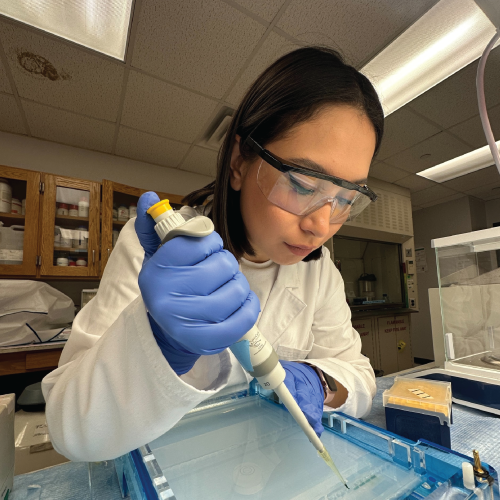
Thanks, Priscilla, for joining us for this #SciComm interview! Let’s start with an introduction—can you tell us a bit about yourself and what first sparked your interest in science?
Hi, I’m Priscilla! I’m currently in the sixth year of my PhD. I grew up in Mexico until high school, after which I moved to El Paso, TX—where I was born—to attend college. My interests in medicine started in a deeply personal way when I lost my grandmother to cancer. It sparked a curiosity about how science drives medicine, though I didn’t fully understand what scientists did at the time and thought medical school was the only path into science.
You have an awesome Instagram channel, @prisdvmvsscience! You’ve mentioned that you work on gut microbiome research. What are gut microbiomes and why are they such an important area of research? Also, what’s your particular research focus?
The gut microbiome, made up of 10-100 trillion bacteria in our gut, is incredibly important as it affects many aspects of our health!
My project focuses on how gut bacteria influence the effectiveness of cancer immunotherapy, specifically immune checkpoint inhibitor therapy. Studies have found that patients who respond to this treatment tend to have a different gut microbiome compared to those who don’t. I’m investigating how these microbes interact with the immune system to improve the outcomes of immune checkpoint inhibitors for distant tumors, such as melanoma, that aren’t directly connected to the gut.
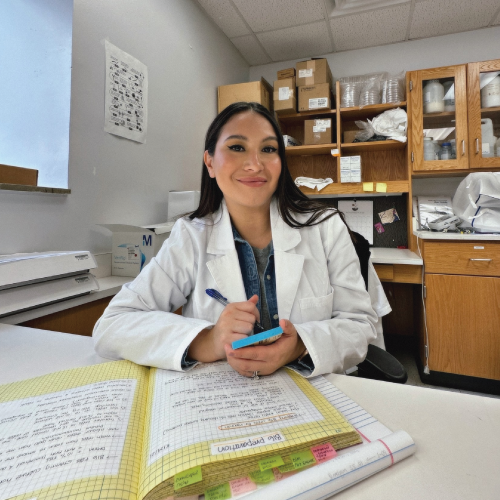
If there’s one thing you could tell everyone about gut microbiome, what would it be?
Try to take care of your gut microbiome because it is one of the most important “organs” in our body!
On your channel, you share a lot of interesting behind-the-scenes footage that give your viewers snapshots of your lab life! What made you decide to start your channel?
I started sharing my journey as a scientist and PhD student for a couple of reasons. First, during my first year, I felt really alone and struggled with imposter syndrome. Even though I had gotten into a PhD program, I often felt like I didn’t know anything.
Another reason was to show that being a scientist is a real career path. Growing up, I didn’t realize this was an option because I never knew any scientists or what their work involved. Even my family had trouble understanding what I do, making it all the more important to share my story and explain my work.
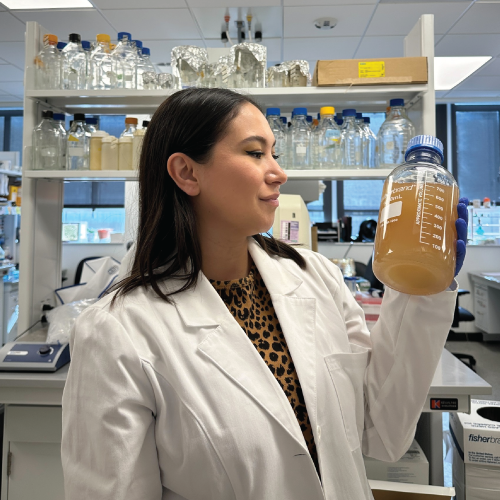
What are your thoughts on the importance of science communication?
Science communication is essential because the more people understand, the less intimidating it becomes.🤗
Although there are scientists all around the world, English is still the dominant language people use to share their findings with the largest audience. In some of your earlier posts, you mention that English is not your first language and since there are so many international scientists around the world, your challenge is one many share. Tell us a little about some of the struggles you faced and how you overcame them!
One of the biggest challenges I’ve faced as a non-native English speaker is presenting my research or networking. I’ve often worried that people won’t understand me, that I’ll say something wrong, or that nerves will make me freeze up and forget my English altogether.
OWhat has helped me the most is practice. I write out what I’m going to say beforehand and rehearse it until I feel more confident. Over time, I’ve realized that the fear is mostly in my head—people almost always understand me just fine.
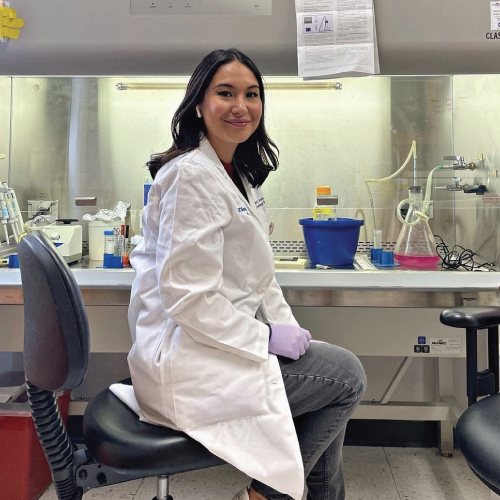
You've shared about burnout and finding balance in life as a scientist. What's the longest you've ever spent at the lab? Do you have a go-to tip on how to avoid burnout?
I once spent around 14 hours in the lab, running an experiment from start to finish.
I try to avoid scheduling experiments on the weekends whenever possible, focus on eating well, and exercising three times a week. I also take advantage of any days off around my experiments to recharge. Therapy has also been a major part of my PhD journey. It has helped me build confidence and set boundaries, ultimately making me a better scientist.
Do you have any last words of advice for young scientists thinking of doing graduate school?
Graduate school is tough, but you’re absolutely capable of handling it. Make sure to find a place where you feel supported and build a community where you can share your concerns, vent about lab struggles, and talk about the ups and downs of grad school.

--
Now for some more light-hearted questions!
Favorite way to unwind after a long day?
Rest and watch Grey's Anatomy
If you could travel anywhere in the world, where would you go?
Japan
As you work with microorganisms for your thesis projects, do you have a favorite bacteria (and/or bacterial smell )?
I appreciate any bacteria that aren’t anaerobic and grow easily, as working with anaerobic bacteria can be tricky. One of my favorites is Serratia marcescens! It’s fascinating because it produces a pink pigment you can see as it grows—even in everyday places like the bathtub!
You know you work in a lab that studies gut microbiomes when
… the lab smells like rancid chicken stock
The world would be a better place if…
… we all showed more empathy toward one another

Thank you, Priscilla, for sharing your incredible journey and insights with us! From your groundbreaking work on gut microbiomes and cancer immunotherapy to your honest reflections on overcoming challenges in grad school, your story is both inspiring and empowering. Your passion for making science accessible and relatable is a gift to the #SciComm community. Follow Priscilla’s journey and lab adventures on Instagram at @prisdvmvsscience! If you'd like to be featured, message us on our Instagram channel, @abm_good!
Educational resources for life scientists and interviews with scientists/science comunicators in the field.
For more in-depth articles, check out our knowledge base, which covers topics such as CRISPR, Next Generation Sequencing, PCR, Cell Culture, and more.
Blog managed by Applied Biological Materials (abm).
