Welcome to our training series on performing your own CRISPR Cas9 experiment for gene knockout. Each week you'll receive instructional material including decision-making tools, protocols, and troubleshooting advice on how to design and carry out your gene knockout experiment.
The first step of a CRISPR project begins with sgRNA design. abm selects sgRNAs for knockout based on three important rules. The selected sgRNA should:
These design rules maximize the effects of frameshift and nonsense mutations that disrupt gene expression. sgRNA target sequences are generally ~20 bp, designed to be immediately upstream of a Protospacer Adjacent Motif (PAM). The PAM sequence varies depending on whether you are using spCas9 or saCas9. The PAM for spCas9 is 5’-NGG-3’ and the PAM for saCas9 is 5’-NNGRRT-3’.
As some promoters can restrict target site selection and gRNA design, it is imperative to choose a suitable promoter to drive the sgRNA expression. For example, the RNA polymerase III-dependent U6 promoter or the T7 promoter require a G or GG, respectively, at the 5’ end of the RNA sequence to initiate transcription. Therefore, if the U6 or T7 promoter is used, it is good to choose a target sequence that has a G or GG at its end. However, if it’s not possible to find an appropriate target sequence with this characteristic, it is possible to bypass this restriction by simply adding the extra G or GG to the 5’ end of the 20 base pair guiding sequence.
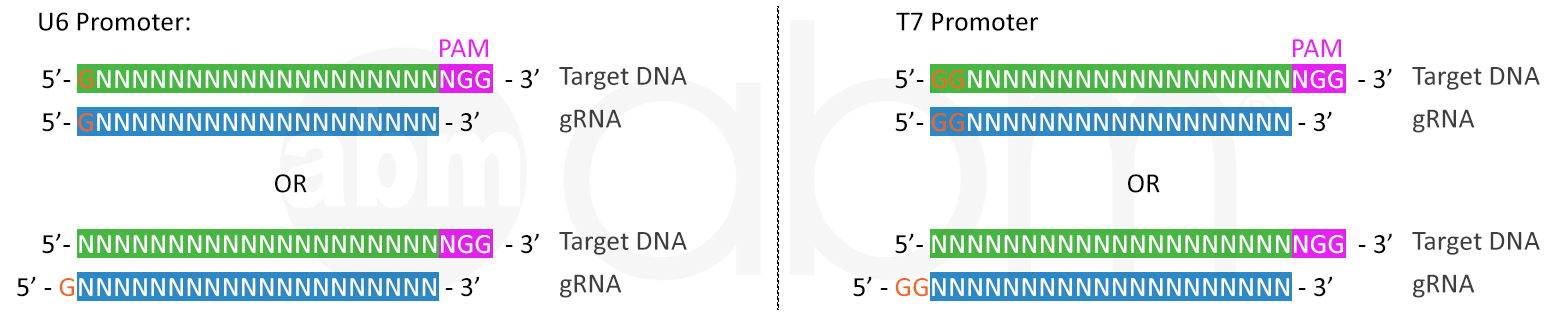
When designing the ~20 bp guiding sequence of the gRNA, the following three points should be taken into consideration: 1) GC content: the typical range is between 40% - 80% GC content where a higher GC content stabilizes the RNA:DNA duplex while destabilizing off-target hybridization; 2) length: the length could be adjusted and range from 17-24 base pairs, with shorter sequences leading to minimized off-target effects; and 3) potential off-target sites of the designed gRNA.
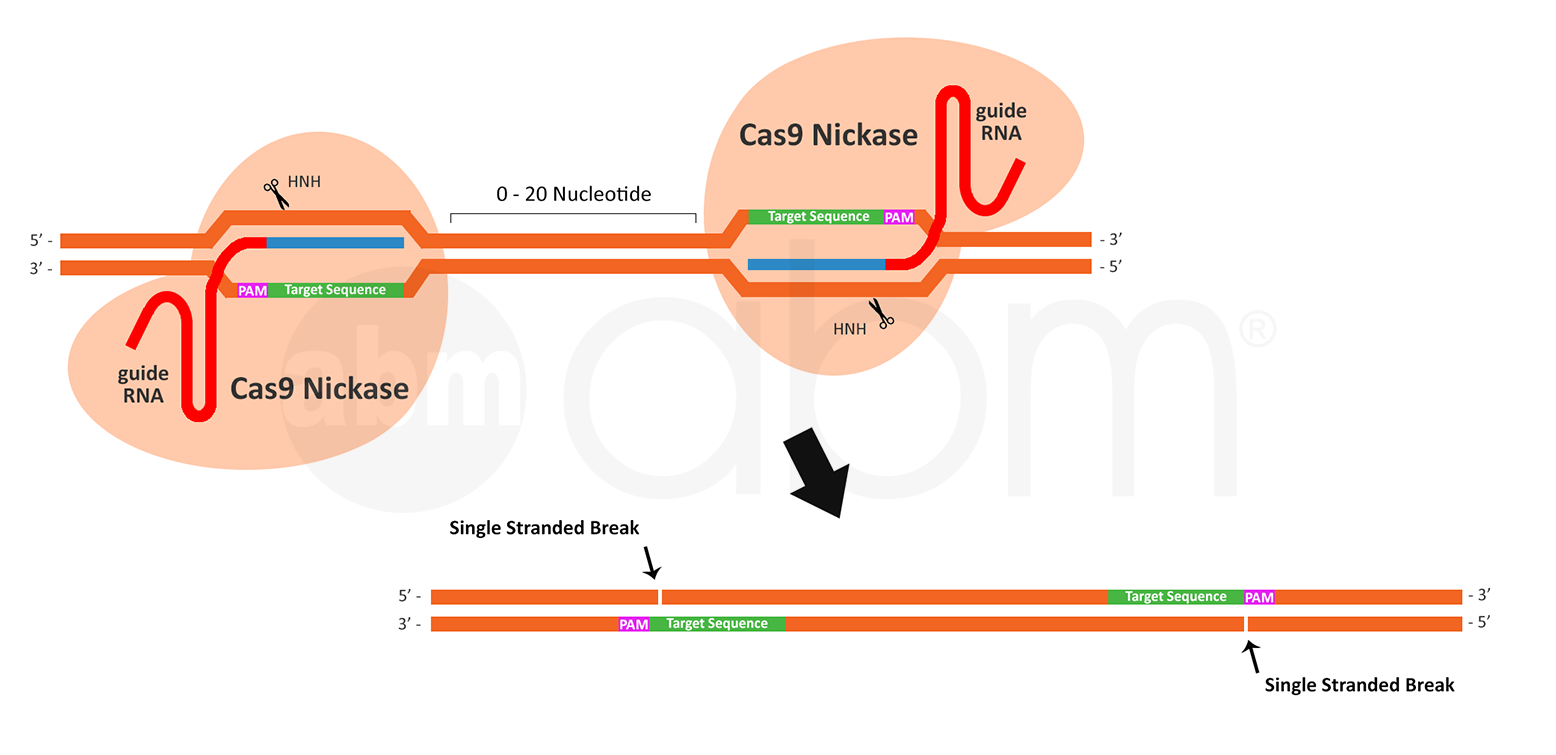
Further considerations need to be taken when using a paired Cas9 nickase to create a double stranded break. When designing sgRNAs for paired nickase activity, it is important to note the following:
There are many tools available to help scientists in the designing process of gRNAs. Here we will highlight two such tools: Chop Chop Harvard and CRISPR Design.
Chop Chop Harvard
Once a particular nucleotide sequence or accession number of a gene of interest is entered into Chop Chop Harvard (Figure 5), the software analyses the sequence and identifies all possible 20bp sequences which are immediately followed by the PAM sequence (5’-NGG). It then scores the gRNA according to a pre-set code, which looks at GC content and off-target sites, and arranges them from best scoring to lowest scoring. For more information on a particular gRNA, simply click on it on the gRNA sequence. This will open a page that shows the potential off-target sites for that particular gRNA and even provides primer sequences that could be used to screen these off-target sites for potential mutations.
CRISPR Design
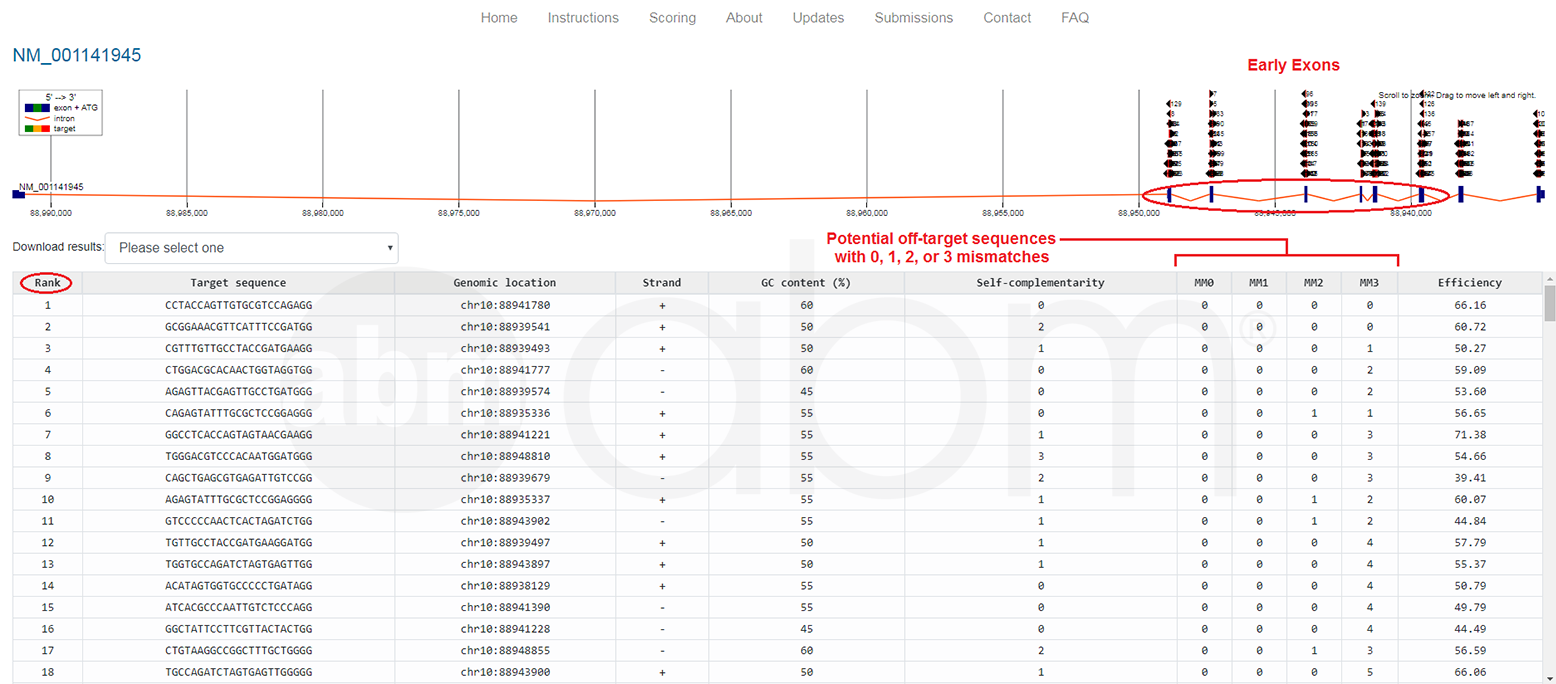
The main advantage of using CRISPR Design is its ability to provide detailed information on Off-Target sights of all potential gRNA. It BLASTS every gRNA sequence and provides a detailed report about its off-target positions and the number of mismatches with the designed gRNA. This software is also superior when designing two gRNAs for paired nickase activity as it will automatically find two gRNAs that are within close proximity to one another.
However, the major drawback of this software is that it can only analyse 500 base pairs of sequence at a time. Therefore, we suggest the use of Chop Chop Harvard for picking potential gRNA sequences and then recommend further analysis with CRISPR Design tool.
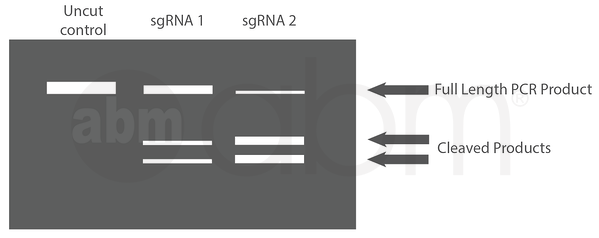
While in silico prediction of sgRNA cleavage efficiency is a useful tool, it doesn’t guarantee high levels of cleavage in vitro or in vivo. For this reason, it’s always best to design multiple sgRNAs for your target gene then experimentally validate their cleavage efficiency.
This can be easily done by performing an in vitro cleavage test using a Cas9 protein, the sgRNA, and the target DNA (which can be a PCR amplicon or linearized plasmid). The molar ratio of Cas9 : sgRNA : DNA should be 10:10:1.
The steps for an in vitro cleavage assay are:
The sgRNA with the strongest cleavage bands will be more likely to perform well in your CRISPR knockout experiment.
For more details on sgRNA design, you can watch the following video, which walks you through the process one step at a time:
Thanks for joining us. Next week we’ll be talking about how to deliver the sgRNA and Cas9 to your cells for efficient expression and gene editing.
Take our Week 2 Quiz, and graduate to becoming a sgRNA Scholar!
How did you do? Share your results with #CRISPRCrashCourse:
